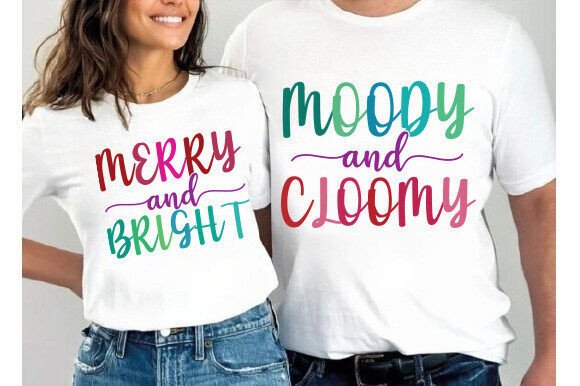
Review: Christmas Couple Funny Shirt Design for Stitchers
As a designer who has spent countless hours staring at digitizing software and troubleshooting thread breaks, I approach every new machine embroidery design with a mix of excitement and skepticism. We have all been there: you buy a cute graphic, load it onto your machine, and realize too late that the stitch density is a nightmare or the details are too fine for standard cotton. That is why I took a close look at the Christmas Couple Funny Shirt Design to see if it holds up in real-world production.
This is not just about whether the image looks cute on a screen. It is about how this embroidery file translates into thread, how it behaves on different textiles, and whether it adds genuine value to your craft business. Let us break down what makes this asset work and where you need to be careful.
First Impressions and Visual Personality
The first thing that strikes me about the Christmas Couple Funny Shirt Design is its playful energy. Holiday designs often fall into two traps: they are either overly sentimental or so cluttered with snowflakes and ornaments that they become a stitching headache. This design avoids both. The layout feels balanced, with a clear focal point that suggests humor and warmth without relying on excessive detail.
From a visual standpoint, the shapes are bold enough to read clearly from a distance, which is crucial for apparel. When you are creating a personalized gift or a product for an Etsy seller shop, readability is key. Customers scrolling through thumbnails need to instantly grasp the joke or the sentiment. The character lines appear clean, suggesting that the underlying vector data—provided as an SVG and EPS—is well-constructed. This matters because clean lines usually translate to smoother satin stitches and fewer jumps in the final embroidery project.
Real-World Application: Beyond the T-Shirt
While the product category lists this under T-Shirt Designs, limiting it to shirts would be a mistake. In my experience, humorous holiday graphics perform exceptionally well on a variety of substrates. I envision this design working beautifully on a heavy-weight canvas tote bag design. The sturdy fabric provides a stable base for the stitches, ensuring the design does not pucker.
Consider a sweatshirt embroidery project. Fleece and French terry are popular for winter wear, but they can be tricky. Because this design relies on strong outlines rather than microscopic details, it should sit well on textured fabrics. I also see potential for baby embroidery items, such as a onesie or a bib, provided you scale it down appropriately. A smaller version could serve as a charming accent on a holiday outfit, appealing to parents looking for unique, handmade product options that stand out from mass-produced retail goods.
For those running a small shop product line, think about home decor. An embroidered pillow cover featuring this couple could be a hit during the holiday season. The key is to match the thread colors to your brand palette. If you sell rustic goods, earthy greens and reds will work; if your brand is modern and bright, opt for high-contrast neon or pastel threads.
Technical Considerations for Stitchers
Here is where we need to get practical. Since this is a digital download containing vector files (SVG and EPS), you will likely need to digitize it yourself or use auto-digitizing software if a native embroidery format is not included. This gives you control, but it also places the responsibility on you to ensure quality.
Stitch density is your primary concern. If you convert this directly without adjusting settings, you might end up with a stiff, cardboard-like patch of thread. For apparel, especially stretchy fabrics like t-shirts, keep the density moderate. Use a light fill stitch for larger areas and reserve satin stitch for borders and text. Avoid dense fills on thin materials, as they will cause puckering even with the best stabilizer.
Pay attention to hoop size. If you plan to stitch this on a cap or a curved surface, ensure the design fits within a smaller hoop, such as 4x4 inches. Large, wide designs do not wrap well around curved structures. For flat items like aprons or tea towels, a larger hoop allows you to maximize the impact of the graphic.
Another critical factor is thread colors. Humor relies on expression. If the faces or key elements of the couple are lost due to poor color contrast, the joke fails. Always test your thread chart against your fabric. On dark fabrics, you may need to add a white underlay or use lighter thread shades to ensure the design pops. Conversely, on white fabric, avoid using light gray or pale yellow for main outlines, as they will disappear.
Where to Use Caution
Not every project is a good fit. I would advise against using this design on very thin, slippery fabrics like silk or chiffon unless you are an advanced stabilizer expert. The weight of the thread can distort delicate materials. Similarly, be cautious with highly textured towels. If the pile is too high, small details in the design might get swallowed by the fabric loops.
If you are creating an embroidered patch, this design is excellent because patches allow for higher stitch density without worrying about garment comfort. However, if you are stitching directly onto a custom apparel item that will be worn daily, prioritize comfort. Test the back of the stitching. If it feels scratchy, consider using a soft cut-away stabilizer or adding a backing tape.
Boosting Value and Customer Trust
Using high-quality design assets like the Christmas Couple Funny Shirt Design elevates your brand. When customers receive a finished product that looks professional, with clean edges and no loose threads, they trust your craftsmanship. This leads to repeat business and positive reviews.
For commercial embroidery sellers, versatility is profit. This single design can be adapted for multiple products: a matching set for couples, a family group gift, or a standalone statement piece. Create printable mockup images showing the design on various items to help customers visualize the end result. This reduces hesitation and increases conversion rates.
Final Designer Notes
Before you list this in your store or stitch it for a client, follow these steps:
- Test on scrap fabric: Never stitch a new design directly on the final garment. Use a similar fabric weight and type to check for puckering or thread breaks.
- Check licensing: Confirm that the license allows for commercial use if you plan to sell finished items. Most digital downloads have specific terms regarding mass production versus handmade sales.
- Inspect the vectors: Open the SVG and EPS files in your design software. Look for stray points or overlapping paths that could confuse your digitizing software.
- Contrast check: View your design in black and white. If the details disappear, you need to adjust your thread choices or simplify the stitch pattern.
The Christmas Couple Funny Shirt Design is a solid addition to your library if handled with technical care. It offers the charm needed for holiday sales while providing the structural simplicity required for reliable stitching. Whether you are an experienced apparel decorator or a hobbyist making gifts, this design rewards attention to detail with a professional, delightful result.