One More Chicken Svg: A Designer's Review
As a designer who has spent years translating digital files into tangible thread, I approach every new asset with a critical eye. When I first opened the file for One More Chicken Svg Funny Chicken Svg, my initial thought was about its potential in the crowded market of farm-themed decor. The description promises a super cute chicken collection perfect for mugs, stickers, and tea towels, but as someone who specializes in textile applications, I needed to know if this graphic holds up when converted from a flat image into a complex machine embroidery design.
The First Impression: Visual Personality and Layout
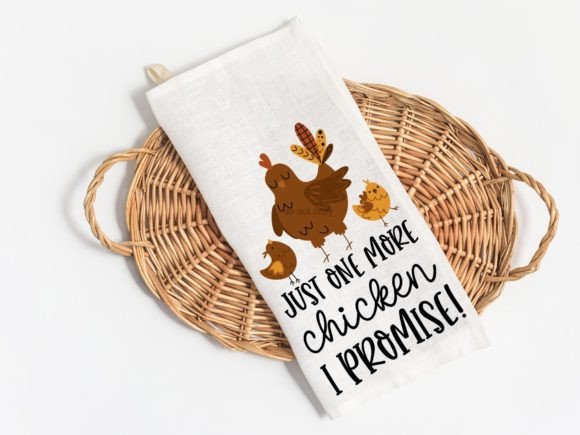
The visual personality of One More Chicken Svg Funny Chicken Svg is immediately engaging. It falls squarely into the category of charming Illustrations that rely on bold outlines and simplified shapes. For an embroidery project, simplicity is often a virtue. Complex gradients or tiny details can get lost in the weave of fabric, but this design appears to prioritize clean lines and distinct areas. This suggests it will translate well into both fill stitch and satin stitch applications without requiring excessive digitization work.
However, the transition from a digital Graphics file to a stitched piece requires careful consideration. The "funny" aspect of the design likely implies exaggerated features—perhaps a wobbly comb, a wide-eyed expression, or a comical stance. In embroidery, these character traits must remain legible. If the design relies on very thin lines for the beak or feet, they might need to be thickened during the digitizing process to prevent thread breakage or gaps in the stitching. The layout feels balanced, making it suitable for centered placement on items like aprons or tote bags, where symmetry is less critical than overall impact.
A Real-World Scenario: The Custom Embroidered Tote Bag
To truly evaluate this asset, let's imagine a specific use case. I am preparing a batch of custom canvas tote bags for a local craft fair. My goal is to create a line of kitchen-themed bags featuring humorous animal characters. I decide to test One More Chicken Svg Funny Chicken Svg as the primary motif. The challenge here is the fabric texture. Canvas is sturdy but has a visible weave that can interfere with fine details.
When I visualize the finished product, the bold nature of the chicken design works in my favor. The thick outlines of the SVG file suggest that even with the texture of the canvas, the shape will pop. I imagine using a bright yellow thread for the body and a contrasting red for the comb and wattle. The "super cute" factor mentioned in the product description translates well here; customers browsing at a craft fair are drawn to whimsy. A tote bag with this design feels like a fun, personalized gift rather than just a utility item. It adds a touch of personality that elevates the perceived value of the handmade product.
If I were to move this design to a sweatshirt, the stakes would be slightly higher. Sweatshirts have a fuzzy pile that can swallow smaller stitches. In this scenario, I would need to ensure the stitch density is high enough to cover the fabric completely without puckering. The design's simplicity helps here, as large open areas allow for dense fill patterns that sit nicely on the fleece material.
Navigating Fabric Challenges and Hoop Constraints
While the design looks promising, there are specific scenarios where caution is required. One major concern with any character-based design is the hoop size. If you plan to use this for a small embroidered patch or a baby onesie, you must verify that the scaling doesn't compromise the integrity of the image. Tiny lettering or minute facial features can become unrecognizable when shrunk down to fit a 4x4 inch hoop.
Another critical factor is the fabric type. On dark fabrics, the contrast becomes key. Since the original file is likely a single-color outline or a simple color block, embroidering it on black cotton requires a light underlay or a white backing to make the colors vibrant. Without proper stabilization, the pull of the needle could distort the funny expression of the chicken, turning a cute face into a sad one. Similarly, on stretchy fabrics like jersey knit used for t-shirts, the design needs a strong tear-away stabilizer to maintain its shape after washing.
I also advise against placing this design on curved surfaces like caps unless the digitized version specifically accounts for the curvature. Standard flat embroidery files often result in uneven tension on the dome of a hat, causing the stitching to ripple. If you intend to use One More Chicken Svg Funny Chicken Svg for hats, you may need to adjust the angle or split the design into sections to accommodate the curve.
Commercial Viability and Business Strategy
For the Etsy seller or small shop owner, the commercial viability of this design hinges on its uniqueness and execution. The "chicken" theme is popular, so standing out depends on how well the design is rendered. A poorly executed stitch job can ruin even the cutest illustration. However, if the stitching is crisp and the thread colors are chosen with care, this design can become a signature piece for your brand.
Consider the versatility. While the description mentions mugs and stickers, which are print-centric, the vector nature of the SVG allows for infinite scalability. This makes it an excellent asset for creating printable mockups to showcase your handmade product line before production. You can generate high-quality images of the design on various products to build customer trust and engagement.
Furthermore, the design fits perfectly into holiday embroidery collections. Think of Thanksgiving centerpieces, Easter pillow covers, or spring nursery decor. The ability to adapt this graphic into an applique design adds another layer of dimension. Imagine the chicken cut from felt and stitched onto a heavy wool blanket; the texture contrast would be delightful.
Practical Notes for the Professional Designer
Before committing to a full run of products, I always recommend a rigorous testing phase. Here are my practical notes for working with One More Chicken Svg Funny Chicken Svg:
- Test on Scrap Fabric: Never skip the test run. Stitch the design on a scrap piece of the exact fabric you plan to use. Check for puckering, thread breaks, and alignment issues.
- Check Thread Color Contrast: Ensure the colors you choose provide enough contrast against the background fabric. Low contrast can make the design look muddy.
- Review Stitch Density: If the design has large open areas, consider adding a mesh fill to prevent the backing from showing through. Conversely, avoid over-densifying small areas to prevent bulk.
- Confirm Licensing: As a professional, always verify the license terms. Can you sell the finished finished product? Can you resell the digital file? Understanding the rights associated with the digital embroidery file is crucial for your business compliance.
- Inspect Small Details: Zoom in on the eyes and beak. Are they too small to stitch accurately? If so, manually adjust the digitization to enlarge these critical features.
- Use Proper Stabilizer: The right stabilizer is the unsung hero of embroidery. For textured fabrics, a cut-away stabilizer provides long-term support, while tear-away works well for stiff materials like denim.
In conclusion, One More Chicken Svg Funny Chicken Svg offers a solid foundation for a variety of creative projects. Its cute aesthetic and clean lines make it a versatile choice for apparel decorators and crafters alike. By paying attention to fabric choices, stabilizer usage, and digitization adjustments, you can transform this digital graphic into a high-quality, professional-looking embroidered piece that delights customers and enhances your brand. Whether it ends up on a cozy tea towel or a trendy tote bag, the success lies in the execution.